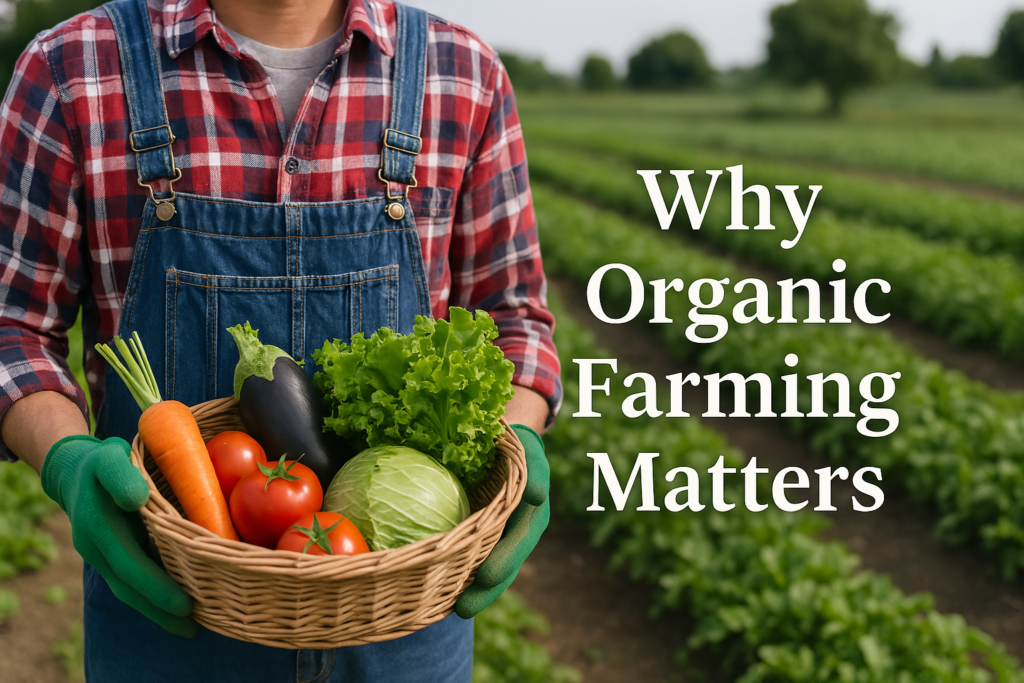
Organic farming isn’t just a trend – it’s a movement toward a healthier planet and healthier people. By avoiding synthetic fertilizers, chemical pesticides, and genetically modified organisms (GMOs), organic farming protects soil fertility, promotes biodiversity, and keeps harmful residues out of our food. It supports local farmers, encourages sustainable agriculture, and creates eco-friendly food systems that care for both the earth and future generations. Choosing organic means choosing clean food, clean water, and a greener environment
Moreover, organic farming nurtures the ecosystem by embracing techniques such as crop rotation, composting, vermiculture, and the use of biofertilizers and biopesticides, which enhance soil structure and health. It also promotes animal welfare by ensuring ethical practices, free-range livestock, and access to organic feed. This holistic approach to farming results in more nutrient-rich and chemical-free produce while significantly reducing the carbon footprint and helping combat climate change.
In addition, the growing trend of agro-tourism is helping bridge the gap between consumers and farmers. Farm stays, organic food experiences, rural tourism, and hands-on farming activities allow visitors to reconnect with nature, understand traditional farming methods, and experience rural life firsthand. Agro-tourism not only creates income opportunities for rural communities but also educates people about the importance of sustainable and regenerative farming practices.
Supporting organic agriculture and agro-tourism helps build resilient rural economies, preserve indigenous farming knowledge, and promote green tourism. As consumers, every organic choice is a step toward a more sustainable lifestyle, a healthier food system, and a vibrant countryside.